Four reflections from Swift at Sibos 2026
Under the theme ‘Digital finance for AI-driven economies’, Sibos 2026 brought the global financial community together in Miami for four days of ideas, debate and collaboration.

Across payments, digital assets and AI, one theme stood out at Sibos 2026: the conversation is increasingly shifting from ambition and experimentation to implementation and scale. And that conversation travelled far, with almost 11,000 delegates and more than 500 expert speakers in attendance, making it the largest Sibos held in the Americas to date.
Here are our top takeaways from Sibos 2026
1 | Cross-border payments will be increasingly defined by better customer experiences
2 | New forms of value are moving from experimentation towards an interoperable financial system
3 | AI and emerging technologies raise the premium on trust and resilience
4 | The industry is shifting from isolated innovation to collective execution
1. Cross-border payments will be increasingly defined by better customer experiences
The future of cross-border payments is no longer something for institutions to plan for – it’s being delivered now. Throughout Sibos week, this was a key theme that touched many different sessions.
Alongside our community. we explored how the payments scheme and ledger are progressing from strategic vision to operational reality. Speakers highlighted measurable results, expanding participation and a growing industry commitment to building the next generation of cross-border payments together.
"The scheme and ledger are no longer simply Swift-led initiatives,” said Nick Kerigan, Head of Innovation at Swift, during the session 'Live, scaling, next: the next evolution of cross-border payments'. “They are increasingly becoming industry-wide market phenomena."
The Swift payments scheme is designed around a simple ambition: ensuring cross-border payments have the same speed, transparency and predictability as domestic payments.
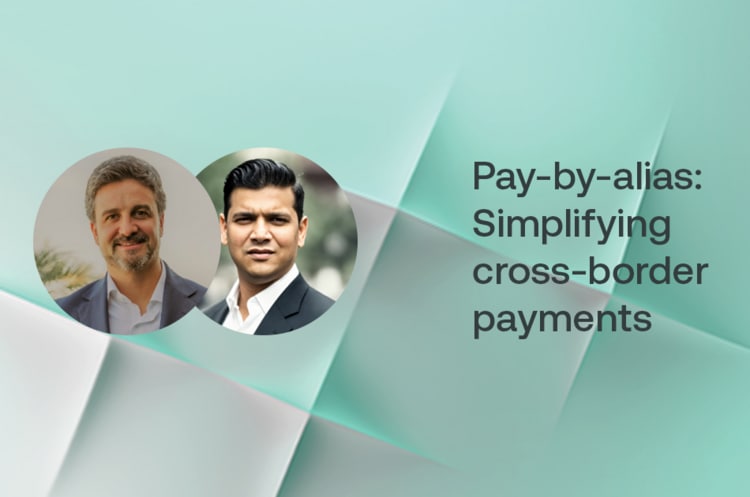
With over 100 banks signed up, the next step is to remove complexity even earlier in the payment journey – enabling customers to send payments using familiar aliases such as phone numbers or email addresses, rather than complex account details.
"The opportunity we have is to take a phone number, an email address, something that you already know, and use it to initiate a payment,” said Ruben Gonzalez, Head of Iberia & Strategic Accounts at Swift.
2. New forms of value are moving from experimentation towards an interoperable financial system
Digital assets featured prominently at Sibos, but the conversation has moved well beyond experimentation. The focus is increasingly on how tokenised forms of value can operate at scale within the broader financial ecosystem.
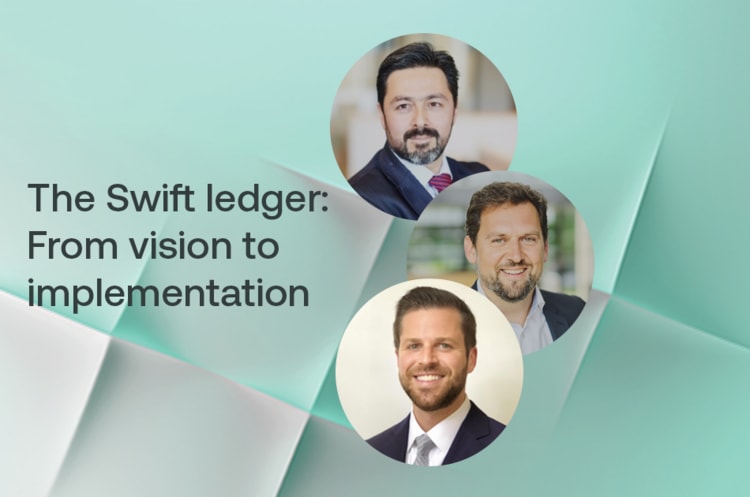
Across sessions, speakers demonstrated how Swift’s ledger can provide a shared orchestration layer for interoperable tokenised money, supporting 24/7 cross-border payments while connecting new forms of value to trusted financial infrastructure. The emphasis was firmly on practical implementation, not technology for technology’s sake.
“The whole point of the ledger is not just to have a blockchain, it's to make money move where it's required so that business can flow,” said Thomas Dugauquier, Tokenised Assets Product Lead at Swift.
The ledger is now ready for initial use, with 17 banks from around the world piloting live cross-border transactions using tokenised deposits.
Speakers also emphasised that the industry's challenge is no longer simply creating new digital asset ecosystems, but rather it is making them work together.
“It does feel like a real year of movement on interoperability, with the industry and the public sector coming together and saying: 'What are all the things we need to do to make something really happen?'", said John Jackson, Head of the Wholesale Payments Division at the Bank of England during the session 'How tokenised finance is moving from concept to reality'.

4. The industry is shifting from isolated innovation to collective execution
A common thread across the entire conference is that progress can no longer be achieved in isolation.
Whether improving today’s cross-border payment experience, connecting tokenised deposits, developing standards for digital assets or exploring AI-enabled finance, these areas are no longer separate challenges, and progress cannot be achieved unilaterally. It depends on banks, market infrastructures, regulators, and technology providers working together.
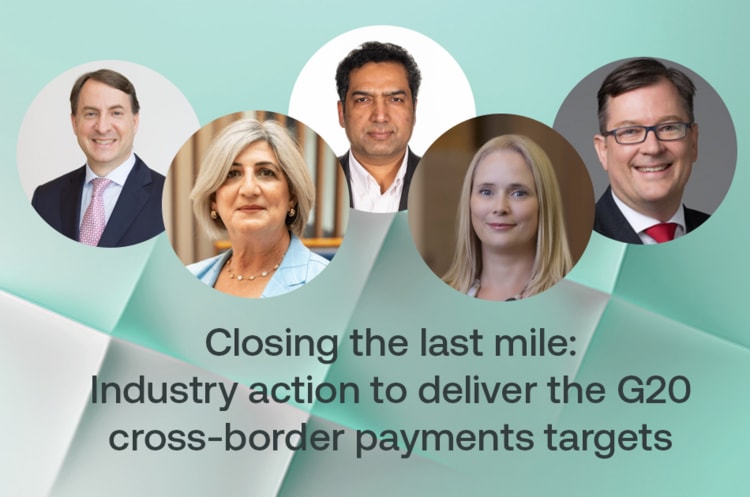
As Rosanna Thomas, Vice President and Head of Payment Solutions at Fiserv, stated during a 'Closing the last mile' session: "As a financial institution, you rely on your technology providers and market infrastructure providers to help drive your strategies, and work with them to achieve those goals. Everyone has a part to play, and we have to work together to realise the value that we bring to the market."
Miami showed that this collaboration is already delivering tangible results. The task now is to build on that momentum – scaling what works, connecting what is fragmented and continuing to put better outcomes for customers at the heart of innovation.
Experience Swift at Sibos on demand
10+ sessions. 30+ speakers. 5+ hours to explore.